
Roger Hilton
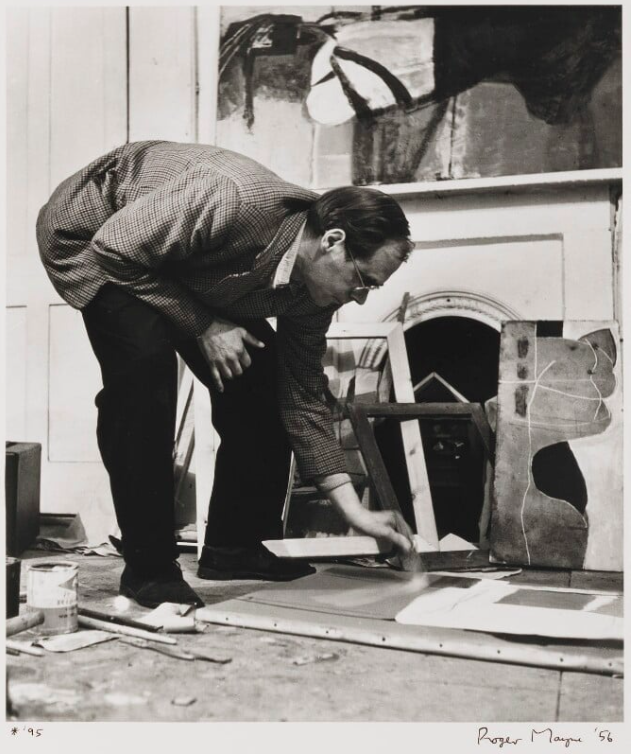
Roger Hilton CBE (1911–1975) was a pioneering British painter whose career bridged European modernism and post-war British abstraction. Associated with the St Ives School, though always independent of it, Hilton developed a bold, instinctive visual language shaped by tachisme, CoBrA and the natural world.Born Roger Hildesheim in Middlesex, he studied at the Slade School of Fine Art under Henry Tonks and later in Paris, where exposure to continental avant-garde movements shaped his early direction. During the Second World War, he served as a commando and was taken prisoner for three years following the Dieppe raid — an experience that left an enduring mark on his life and work.
Hilton turned to abstraction in the early 1950s, creating paintings of gestural confidence and raw immediacy. His work quickly gained recognition. He won the John Moores Painting Prize in 1963 and represented Britain at the Venice Biennale the following year, where he received the UNESCO Prize. He was appointed CBE in 1968.
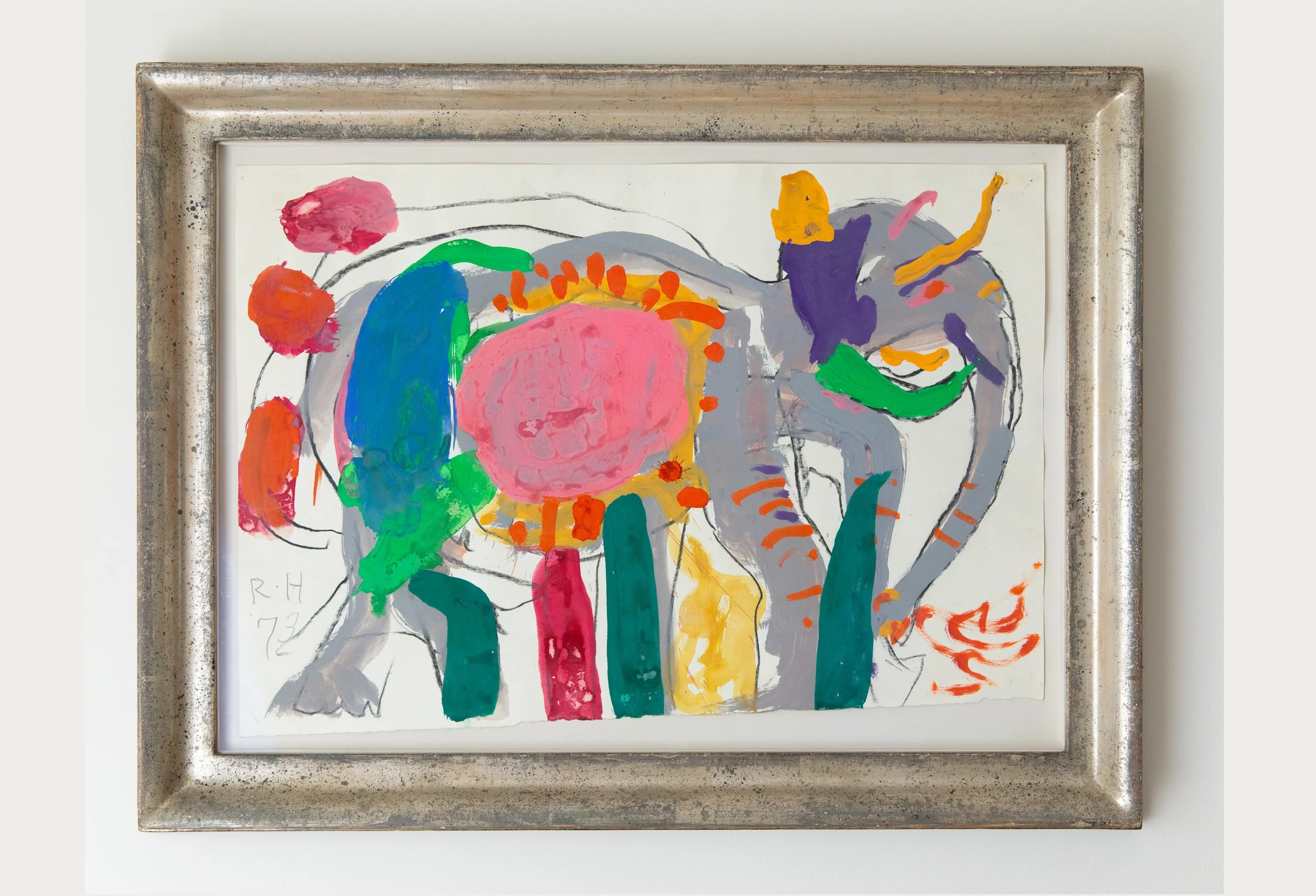
By the late 1950s and into the 1960s, Hilton began to reintroduce figuration, culminating in his late works — drawings and paintings made from his bed after he became bedridden in 1970. These final pieces, filled with childlike imagery and existential reflection, distilled a lifetime of experience into vivid, intuitive mark-making.
Hilton died in Cornwall in 1975. His work is held in major collections including Tate and the Yale Center for British Art, remaining a vital and influential force in the story of British modernism.



WORKS
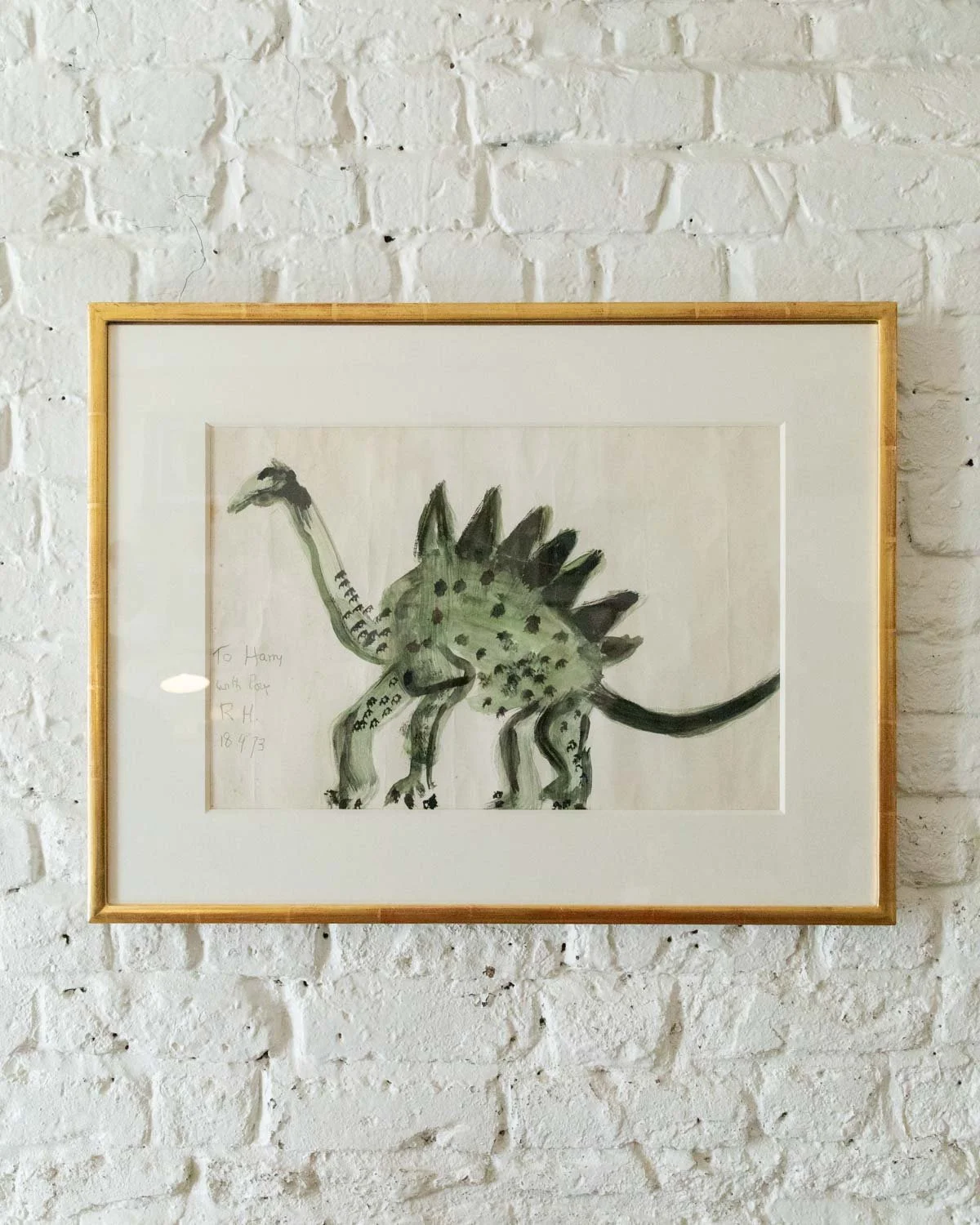
A gouache and charcoal work on paper depicting a simplified, gestural animal form. Executed with bold line and a pared-back composition, the work reflects Hilton’s direct and instinctive approach to mark-making in his later works on paper.
Roger Hilton (1911–1975) was a British painter associated with the St Ives School and one of the leading figures in post-war British art. His work moved between abstraction and figuration, developing a distinctive visual language characterised by expressive gesture, economy of line and a strong sense of spontaneity. His late works on paper are among his most immediate and recognisable works.
Origin: British
Period/Style: Modern British / St Ives School
Date: 1973
Material: Gouache and charcoal on paper
Dimensions: 58.5cm height × 76cm width
Inscribed: To Harry / with love / R.H. / 18.9.73
+ Shipping Info
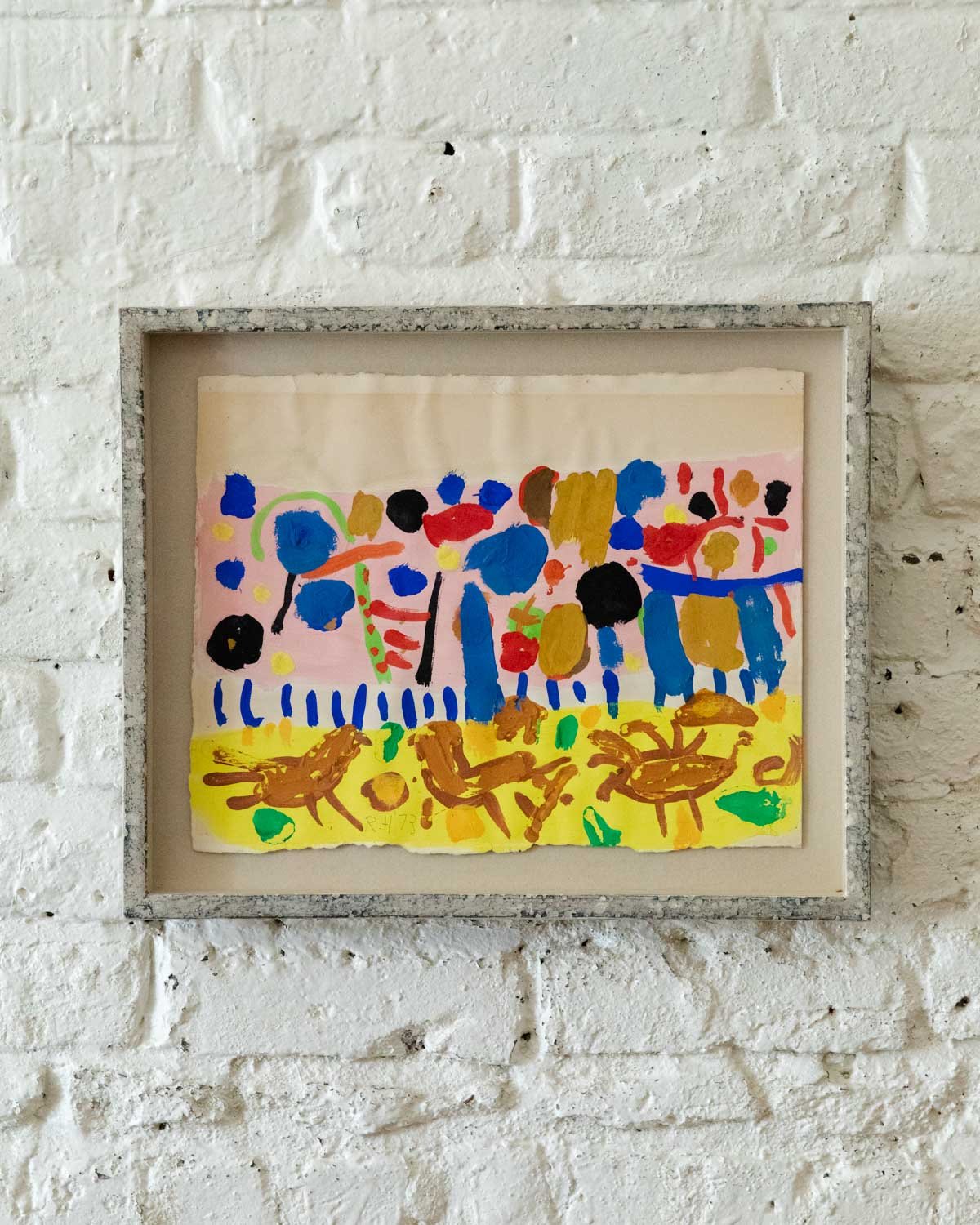
A gouache work on paper depicting abstracted forms set within a bold field of colour. Executed with instinctive brushwork and strong tonal contrasts, the composition reflects Hilton’s late-period approach, characterised by expressive gesture, spontaneity and a direct engagement with form.
Roger Hilton (1911–1975) was a British painter associated with the St Ives School and one of the leading figures in post-war British art. Moving between abstraction and figuration, he developed a distinctive visual language defined by economy of line, expressive colour and an instinctive freedom of mark-making. His late works on paper are among his most immediate and recognisable works.
Origin: British
Period/Style: Modern British / St Ives School
Date: 1973
Material: Gouache on paper
Dimensions: 38cm height × 46cm width
+ Shipping Info