A Japanese wooden money box modelled as a traditional house, dating from the first half of the 20th century. Contrasting natural woods are used to articulate the tiled walls, shuttered windows, panelled doors and pitched roof. The box incorporates a concealed puzzle mechanism, with sections of the roof sliding to reveal the coin slot and open the box.
The decoration draws on Yosegi-zaiku, a Japanese marquetry technique developed in the Hakone region during the late Edo period. Woods of different natural colours, grains and tones are cut and assembled to create geometric patterns. The technique became particularly associated with Himitsu-Bako, or Japanese secret boxes, which use sliding panels and concealed mechanisms to access their contents.
Origin: Japan
Period/Style: Yosegi-zaiku
Date: circa 1930
Material: Mixed woods with parquetry inlay
Dimensions: 13.5cm height × 8.5cm width × 7.5cm depth
+ Shipping Info
A Japanese wooden money box modelled as a traditional house, dating from the first half of the 20th century. Contrasting natural woods are used to articulate the tiled walls, shuttered windows, panelled doors and pitched roof. The box incorporates a concealed puzzle mechanism, with sections of the roof sliding to reveal the coin slot and open the box.
The decoration draws on Yosegi-zaiku, a Japanese marquetry technique developed in the Hakone region during the late Edo period. Woods of different natural colours, grains and tones are cut and assembled to create geometric patterns. The technique became particularly associated with Himitsu-Bako, or Japanese secret boxes, which use sliding panels and concealed mechanisms to access their contents.
Origin: Japan
Period/Style: Yosegi-zaiku
Date: circa 1930
Material: Mixed woods with parquetry inlay
Dimensions: 13.5cm height × 8.5cm width × 7.5cm depth
+ Shipping Info

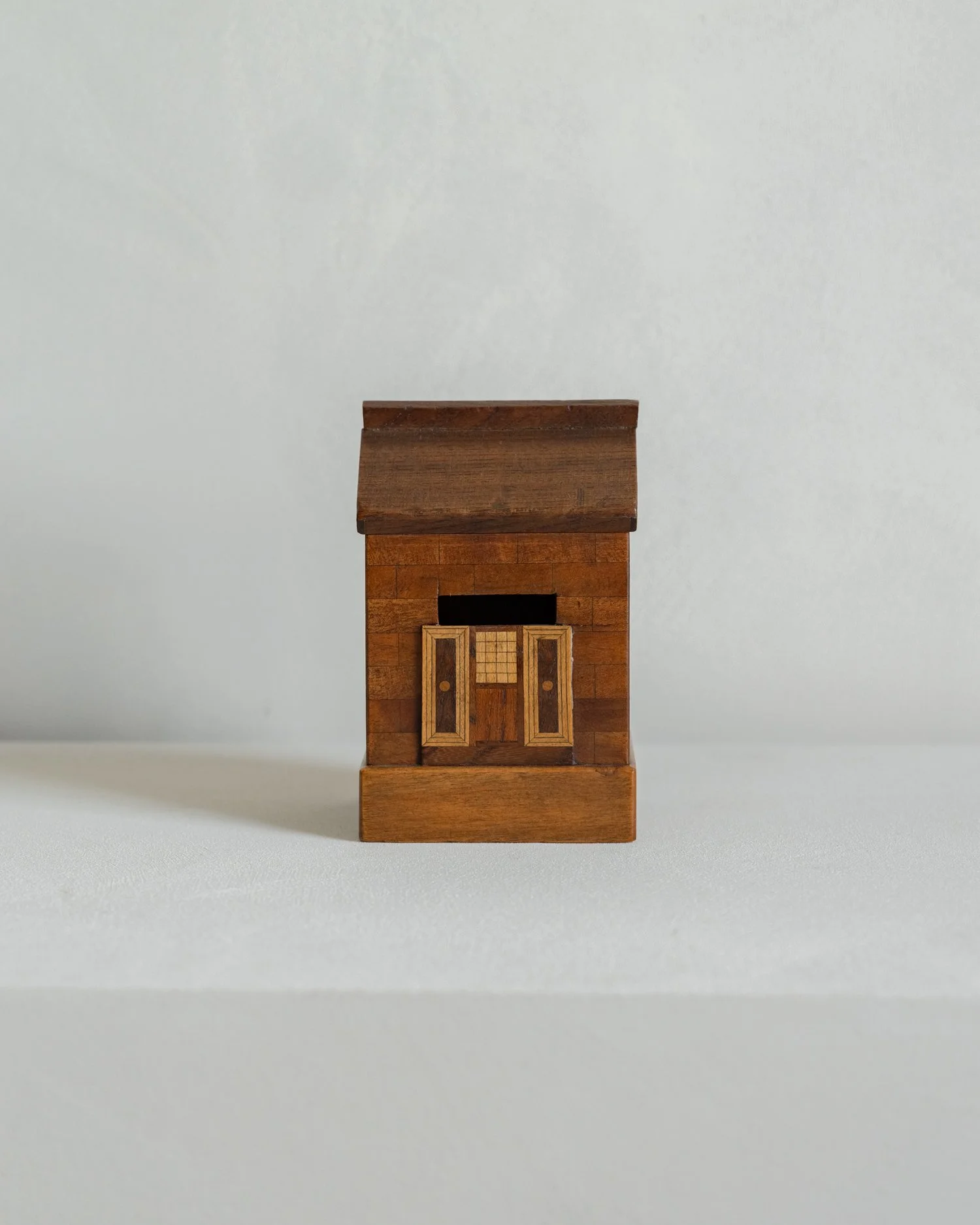 Image 1 of 5
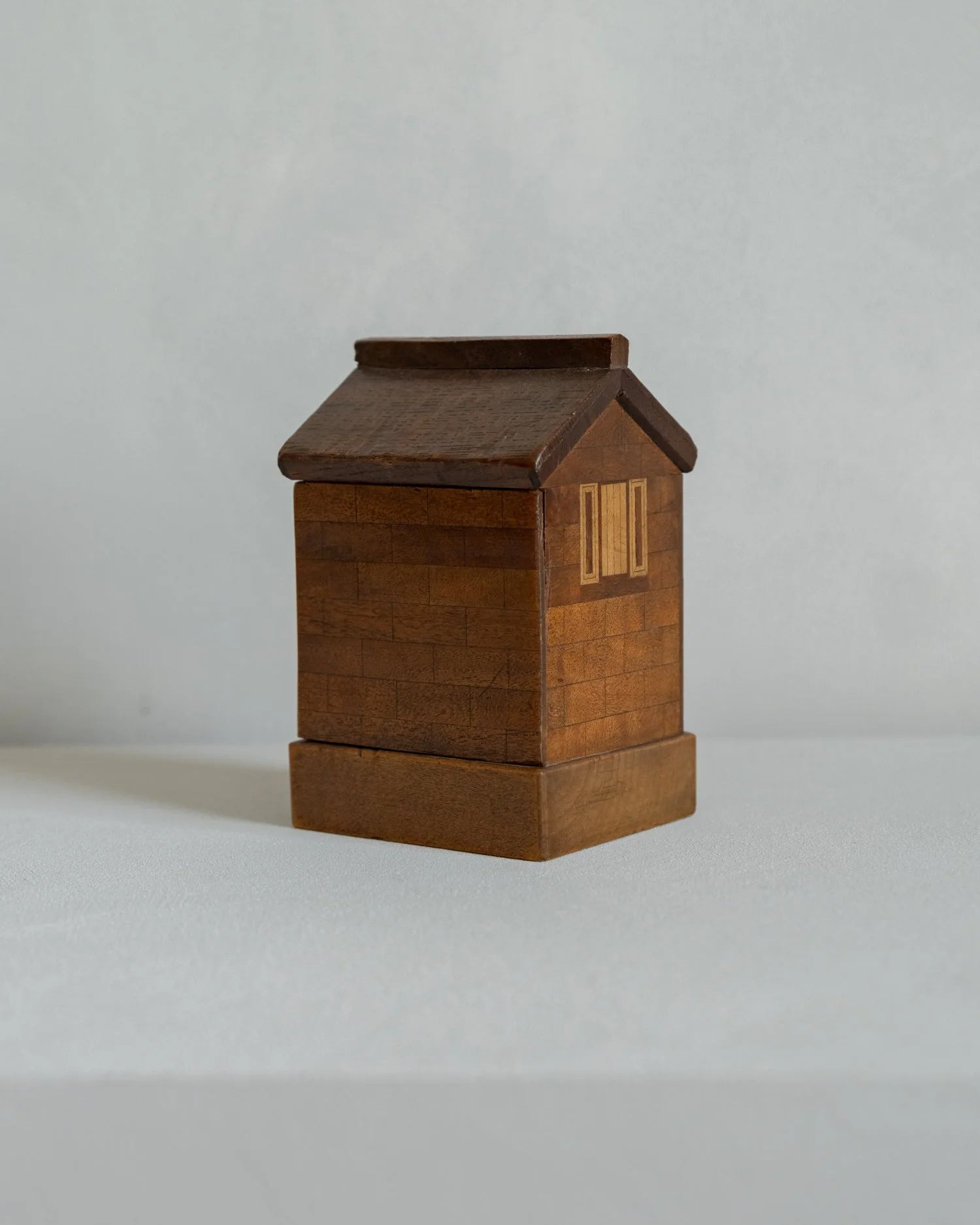 Image 2 of 5
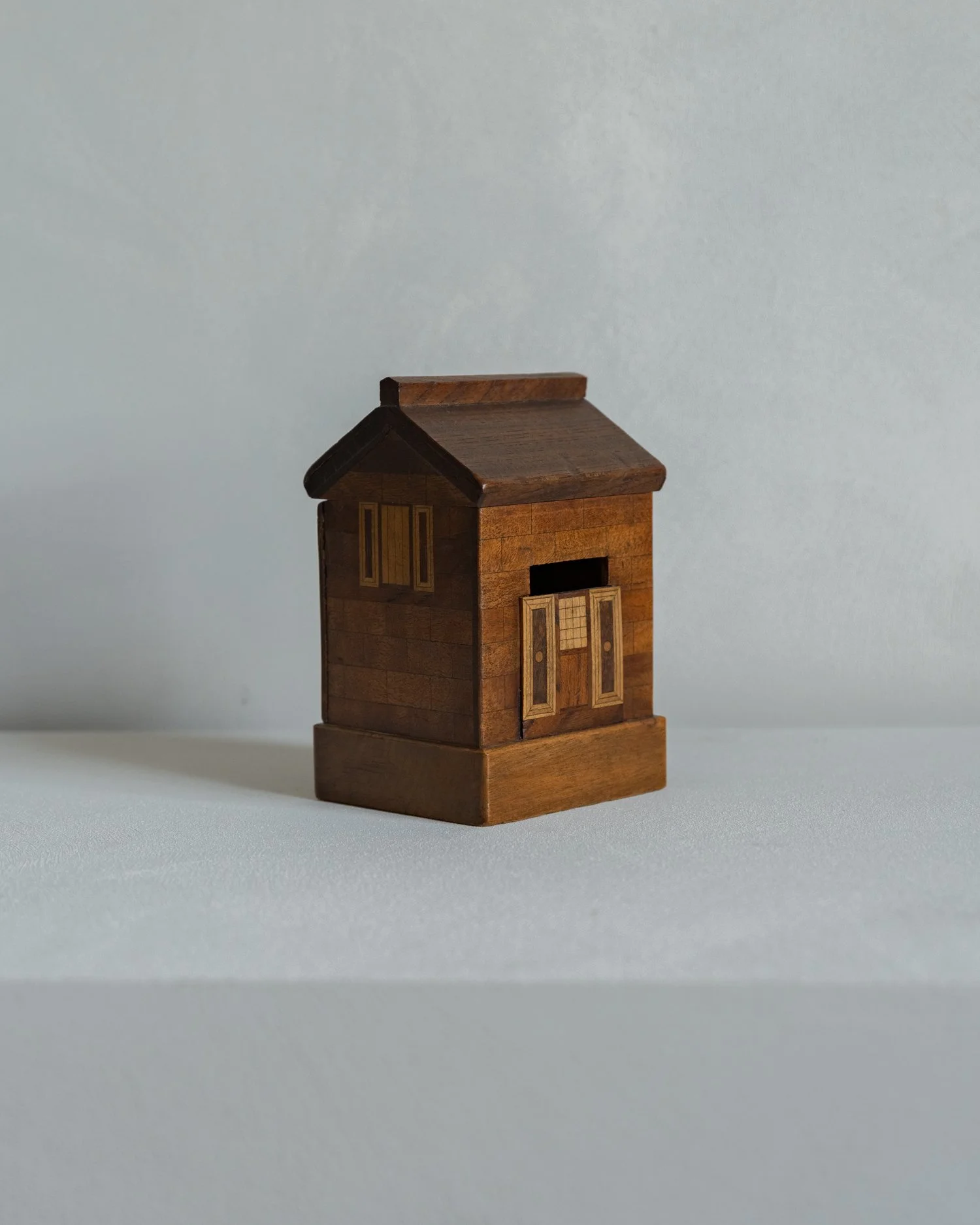 Image 3 of 5
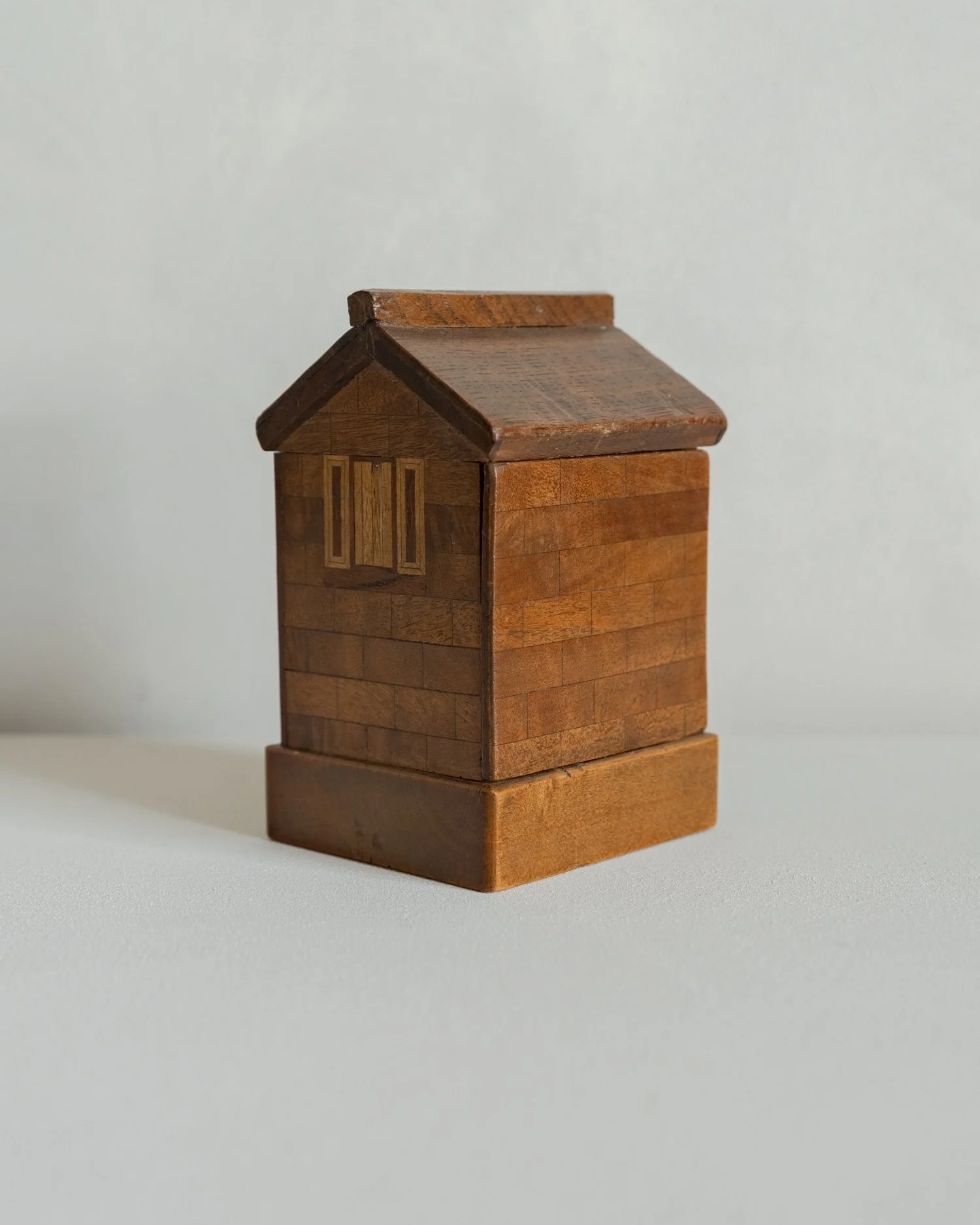 Image 4 of 5
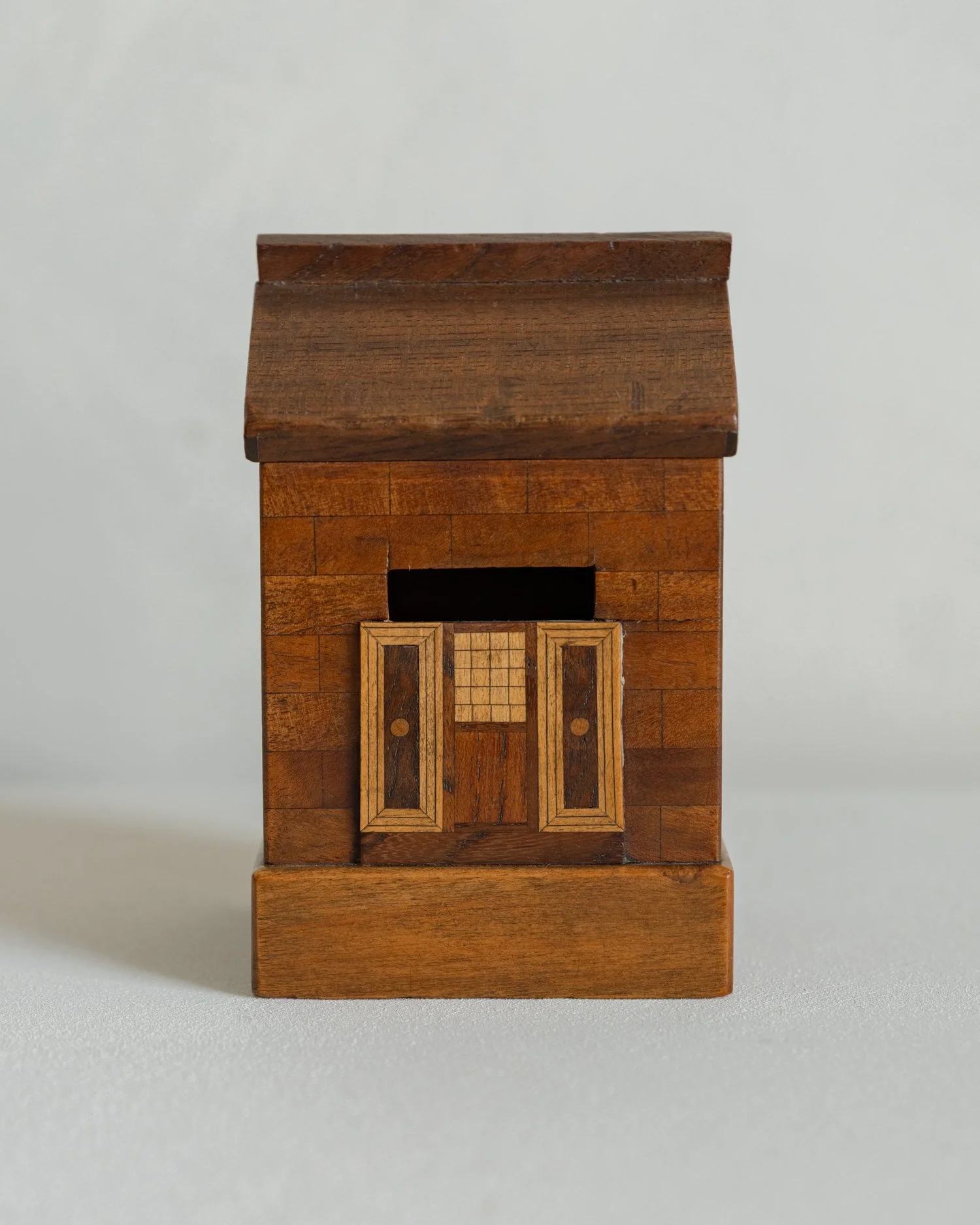 Image 5 of 5