Carved from a single block of wood, this ceremonial ale bowl—known as a kasa or kjenge—is a striking example of 19th-century Norwegian folk craft. Dated 1828, it would have been used for drinking ale during special occasions and celebrations, a tradition that extends back to the Medieval period.
The bowl features a pair of stylised horse-head handles, symbolic elements frequently found in Norwegian decorative traditions. It is painted in the distinctive rosemaling style, a regional form of ornamentation that flourished in rural Norway from the 18th century onwards. A painted inscription around the upper band reads:
“Drik til maade Lad Griddig racde, Hans Anderssen Tøri 1828.”
Ale bowls such as this typically remained with the farmstead where they were made, passed down through generations as both functional and symbolic objects. Rich in craftsmanship and cultural significance, this example exemplifies the continuity of communal and domestic life in rural Norway.
Origin: Norway
Date: 1828
Material: Painted carved wood
Dimensions: 22.6cm height × 39.5cm width × 25.4cm depth
+ Shipping Info
Carved from a single block of wood, this ceremonial ale bowl—known as a kasa or kjenge—is a striking example of 19th-century Norwegian folk craft. Dated 1828, it would have been used for drinking ale during special occasions and celebrations, a tradition that extends back to the Medieval period.
The bowl features a pair of stylised horse-head handles, symbolic elements frequently found in Norwegian decorative traditions. It is painted in the distinctive rosemaling style, a regional form of ornamentation that flourished in rural Norway from the 18th century onwards. A painted inscription around the upper band reads:
“Drik til maade Lad Griddig racde, Hans Anderssen Tøri 1828.”
Ale bowls such as this typically remained with the farmstead where they were made, passed down through generations as both functional and symbolic objects. Rich in craftsmanship and cultural significance, this example exemplifies the continuity of communal and domestic life in rural Norway.
Origin: Norway
Date: 1828
Material: Painted carved wood
Dimensions: 22.6cm height × 39.5cm width × 25.4cm depth
+ Shipping Info

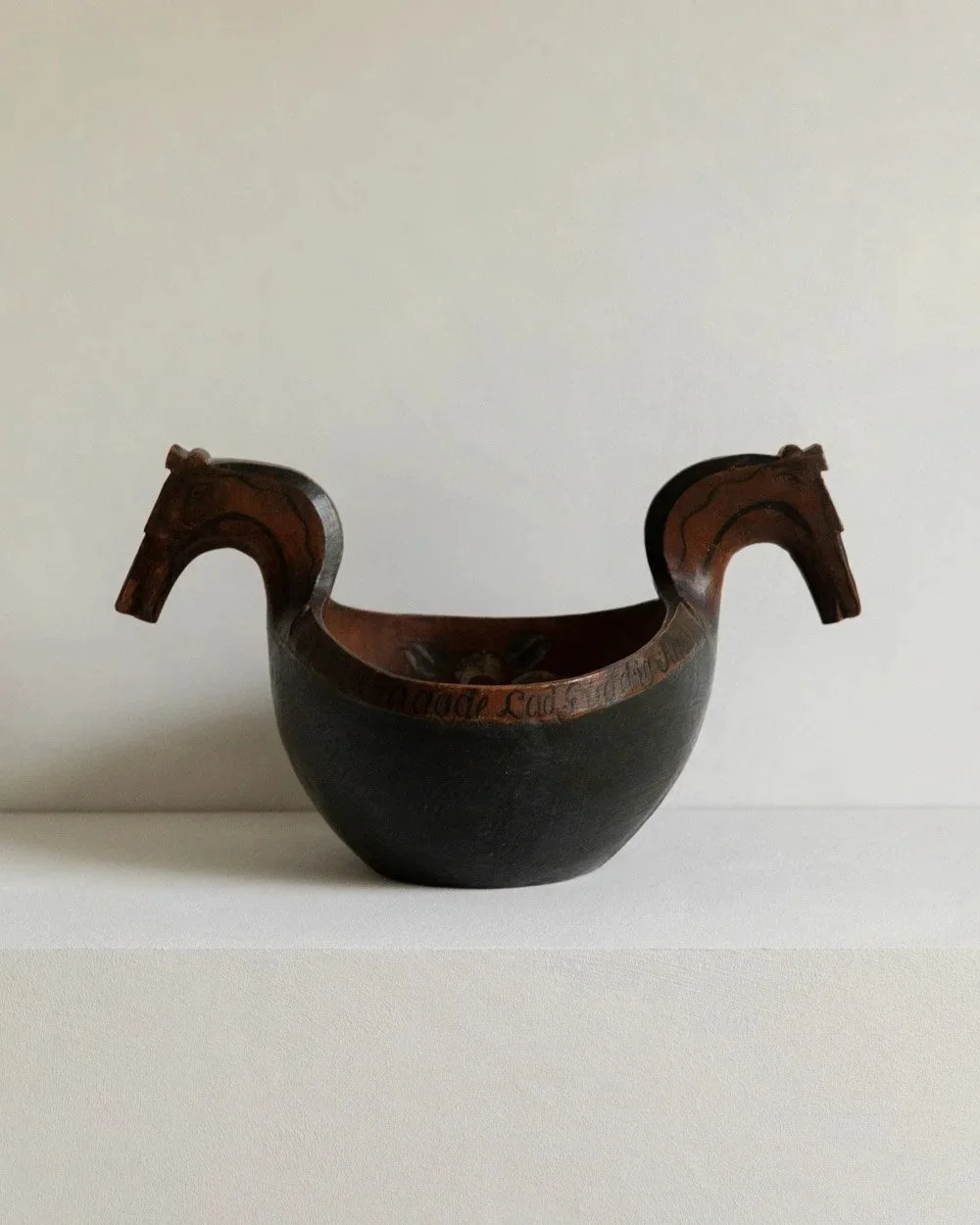 Image 1 of 4
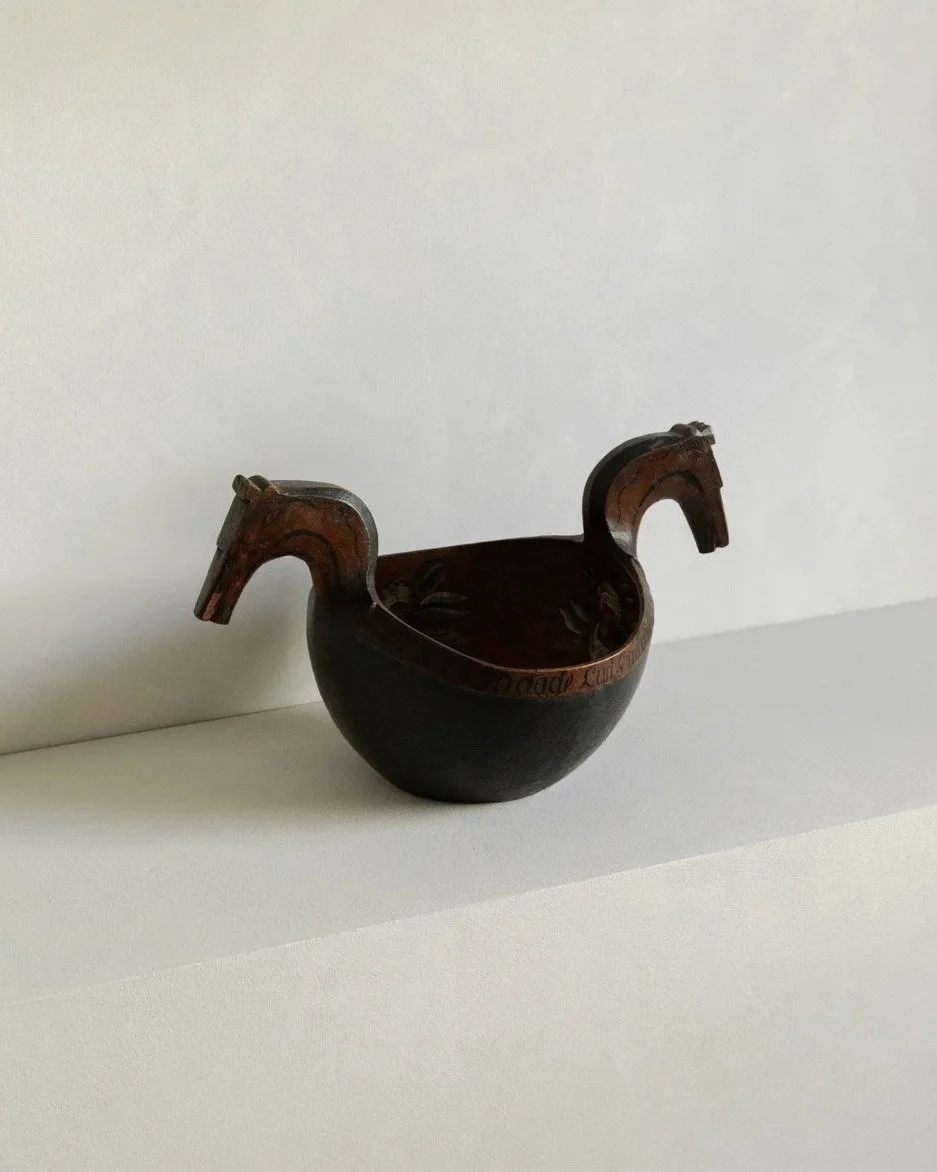 Image 2 of 4
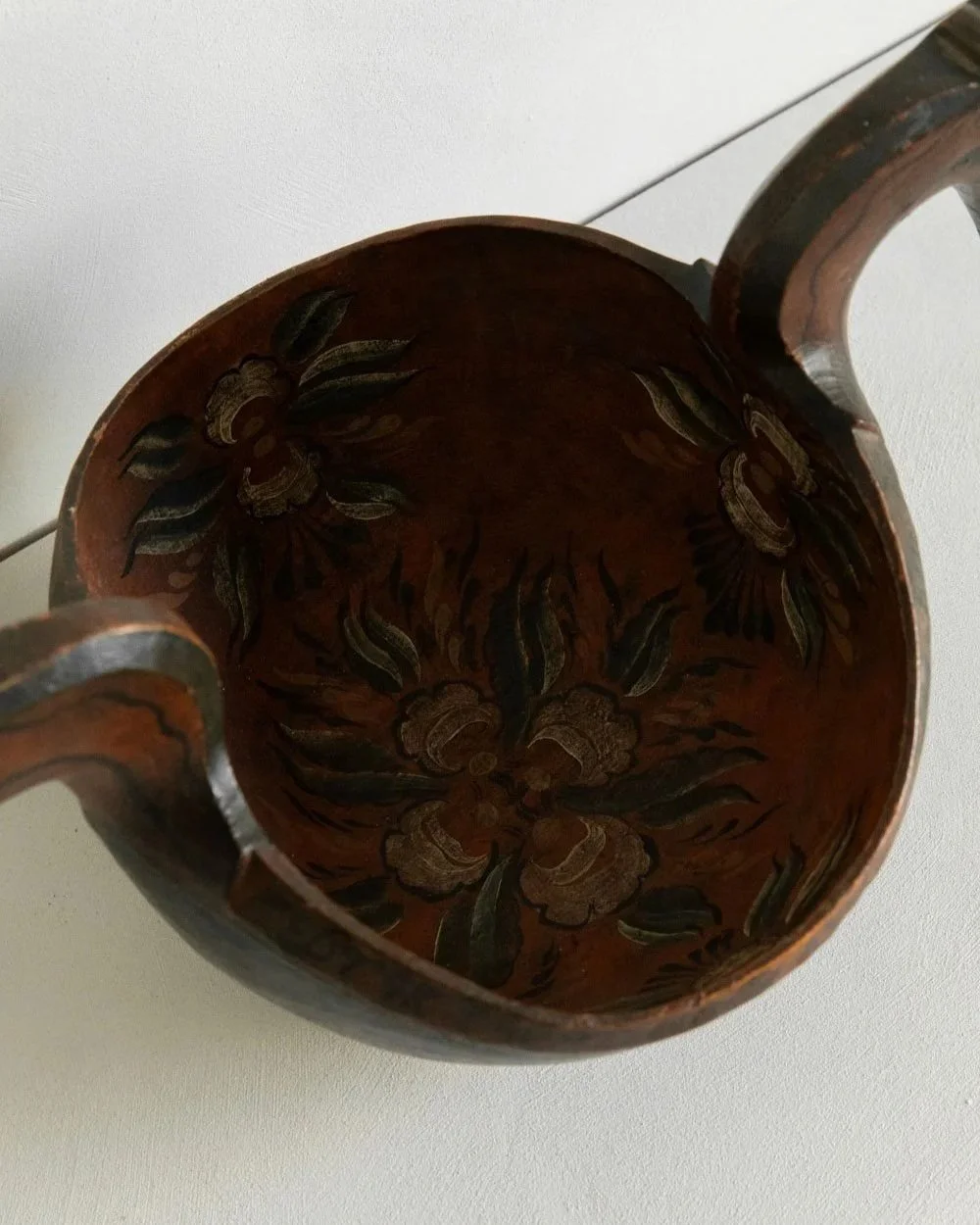 Image 3 of 4
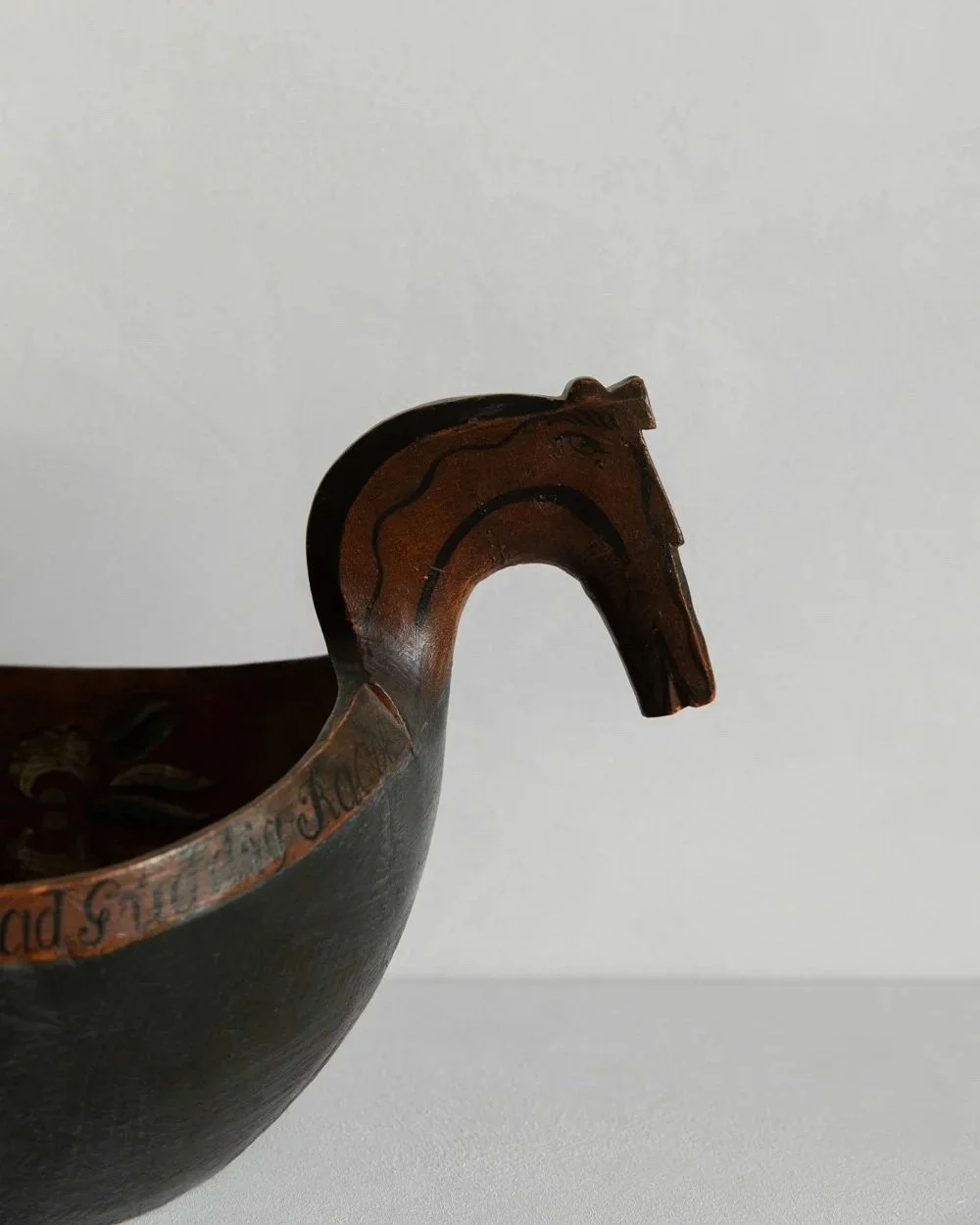 Image 4 of 4