A Persian-style bowl by William De Morgan, decorated by Charles Passenger and bearing both the De Morgan and CP painted monograms. The bowl is ornamented with alternating blue and turquoise panels enclosing stylised carnation stems in white, aubergine and green, reflecting the Persian decorative vocabulary that became a defining feature of De Morgan's work. Executed in tin-glazed earthenware, it exemplifies the rich colour and refined craftsmanship associated with the Fulham pottery.
William De Morgan (1839–1917) was one of the leading ceramic artists of the Arts and Crafts movement. A close collaborator of William Morris, he became renowned for his revival of Islamic and Persian ceramic traditions, combining historic decorative sources with innovative glazing techniques. His work remains among the most celebrated achievements of late nineteenth-century British ceramics.
Origin: British
Period/Style: Arts and Crafts Movement
Date: Circa 1900
Material: Tin-glazed earthenware
Dimensions: 7.5cm height × 20.5cm diameter
Provenance: Private Collection of William De Morgan and John Pearson Pottery.
+ Shipping Info
A Persian-style bowl by William De Morgan, decorated by Charles Passenger and bearing both the De Morgan and CP painted monograms. The bowl is ornamented with alternating blue and turquoise panels enclosing stylised carnation stems in white, aubergine and green, reflecting the Persian decorative vocabulary that became a defining feature of De Morgan's work. Executed in tin-glazed earthenware, it exemplifies the rich colour and refined craftsmanship associated with the Fulham pottery.
William De Morgan (1839–1917) was one of the leading ceramic artists of the Arts and Crafts movement. A close collaborator of William Morris, he became renowned for his revival of Islamic and Persian ceramic traditions, combining historic decorative sources with innovative glazing techniques. His work remains among the most celebrated achievements of late nineteenth-century British ceramics.
Origin: British
Period/Style: Arts and Crafts Movement
Date: Circa 1900
Material: Tin-glazed earthenware
Dimensions: 7.5cm height × 20.5cm diameter
Provenance: Private Collection of William De Morgan and John Pearson Pottery.
+ Shipping Info

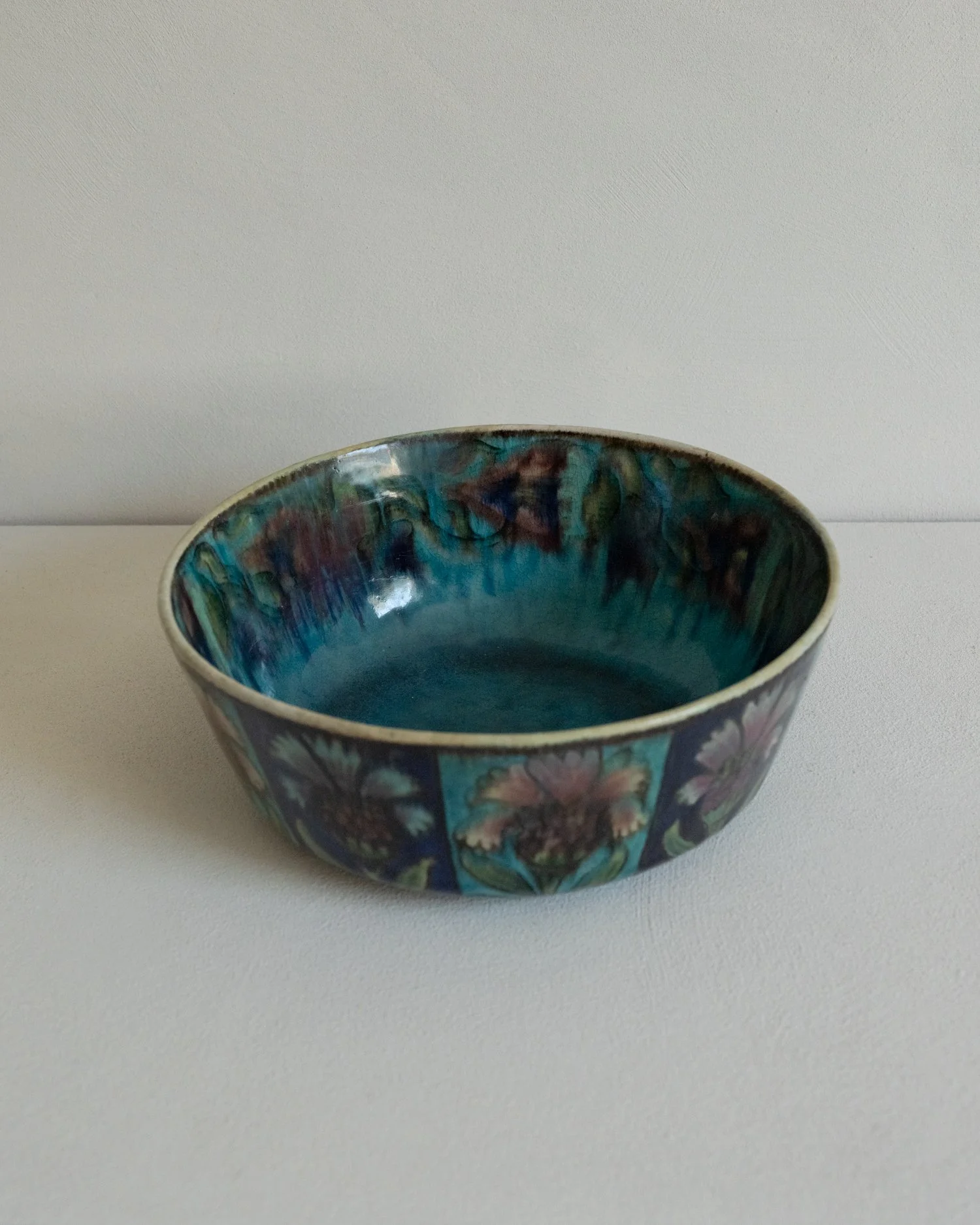 Image 1 of 3
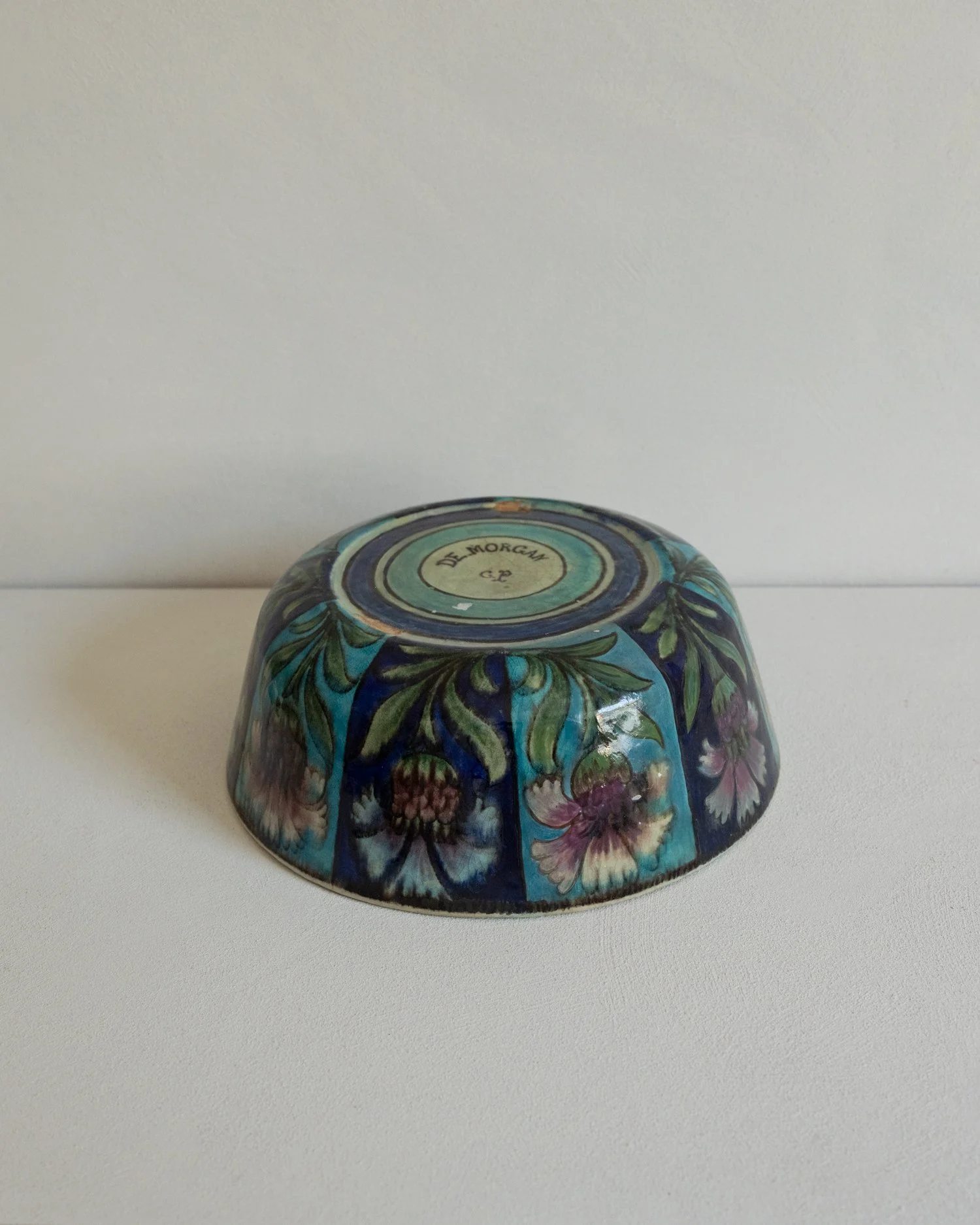 Image 2 of 3
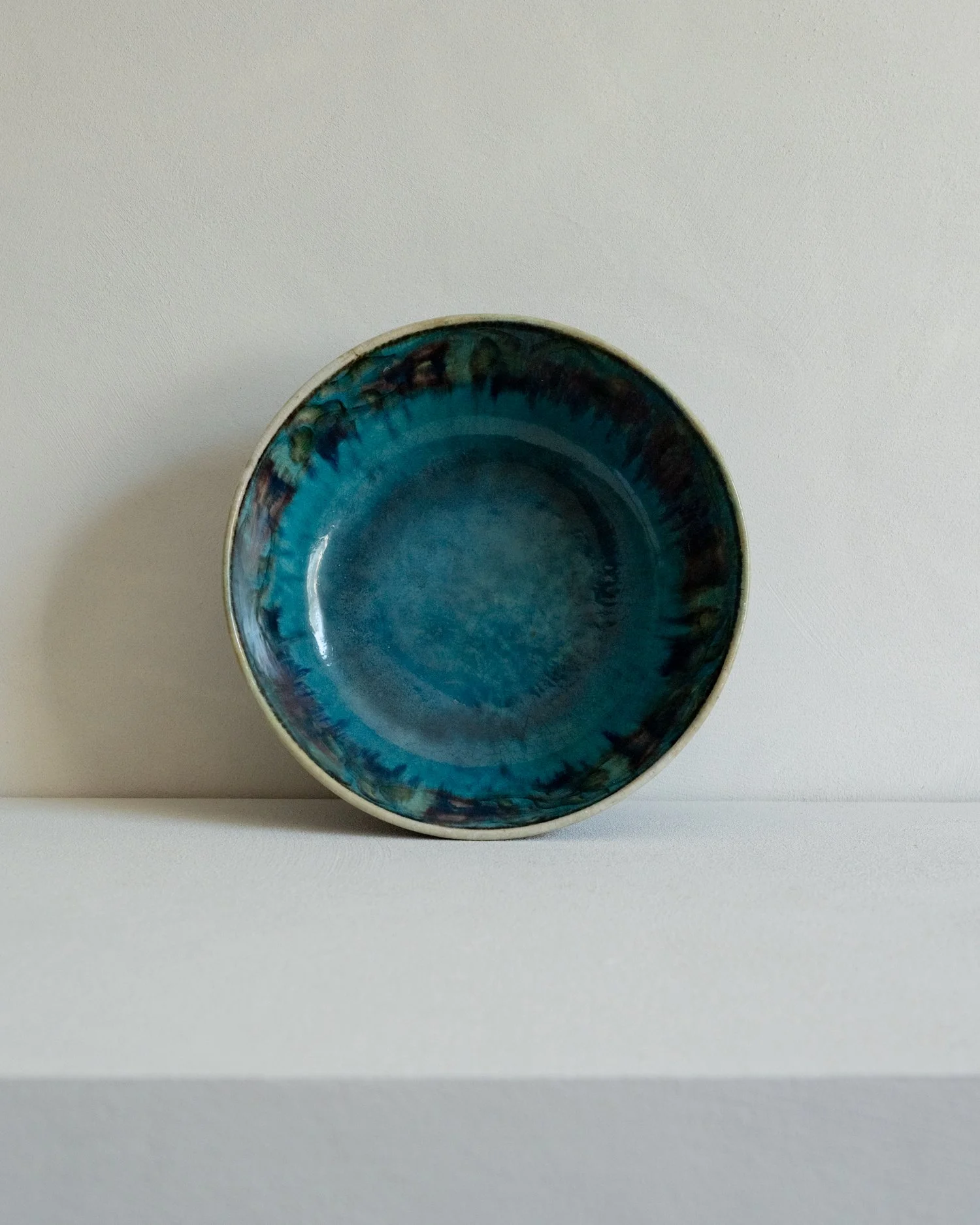 Image 3 of 3