A stoneware bottle vase by British potter Bernard Leach, finished with tenmoku and iron glazes. Made circa 1960, the vase demonstrates Leach’s continued engagement with East Asian ceramic traditions and his emphasis on form, surface and material integrity. The piece is impressed with the ‘BL’ mark and Leach Pottery seals.
Bernard Leach (1887–1979) is recognised as a founding figure of the British studio pottery movement. Born in Hong Kong, he spent his early years in Japan before relocating to England. After returning to Japan in 1909, Leach became deeply influenced by traditional firing techniques, including raku, which led him to pursue ceramics as a practice. In 1920, he co-founded the Leach Pottery in St Ives with Shoji Hamada, establishing a workshop that played a central role in shaping twentieth-century studio pottery in Britain.
In this vase, the dark, reflective tenmoku glaze accentuates the simplicity of the bottle form. The tenmoku technique has its origins in Chinese ceramics of the Song Dynasty, where it was known as Jian ware, and was later adopted and refined in Japanese pottery.
Examples of Leach’s work are held in major public collections, including Tate and the Victoria and Albert Museum, London.
Origin: British
Period/Style: 20th Century
Date: Circa 1960
Material: Stoneware with tenmoku and iron glazes
Dimensions: 35.5cm height × 15cm diameter
+ Shipping Info
A stoneware bottle vase by British potter Bernard Leach, finished with tenmoku and iron glazes. Made circa 1960, the vase demonstrates Leach’s continued engagement with East Asian ceramic traditions and his emphasis on form, surface and material integrity. The piece is impressed with the ‘BL’ mark and Leach Pottery seals.
Bernard Leach (1887–1979) is recognised as a founding figure of the British studio pottery movement. Born in Hong Kong, he spent his early years in Japan before relocating to England. After returning to Japan in 1909, Leach became deeply influenced by traditional firing techniques, including raku, which led him to pursue ceramics as a practice. In 1920, he co-founded the Leach Pottery in St Ives with Shoji Hamada, establishing a workshop that played a central role in shaping twentieth-century studio pottery in Britain.
In this vase, the dark, reflective tenmoku glaze accentuates the simplicity of the bottle form. The tenmoku technique has its origins in Chinese ceramics of the Song Dynasty, where it was known as Jian ware, and was later adopted and refined in Japanese pottery.
Examples of Leach’s work are held in major public collections, including Tate and the Victoria and Albert Museum, London.
Origin: British
Period/Style: 20th Century
Date: Circa 1960
Material: Stoneware with tenmoku and iron glazes
Dimensions: 35.5cm height × 15cm diameter
+ Shipping Info

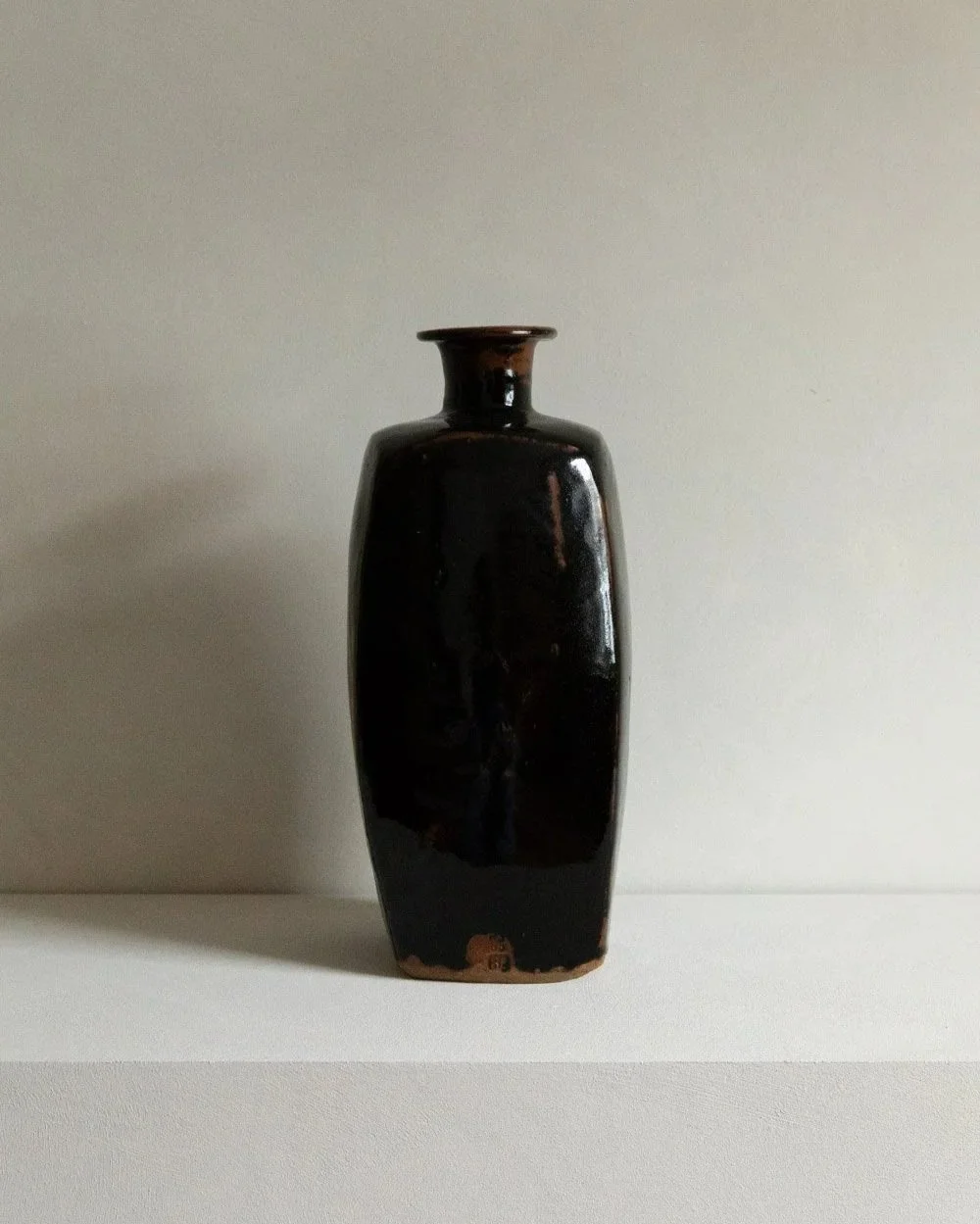 Image 1 of 3
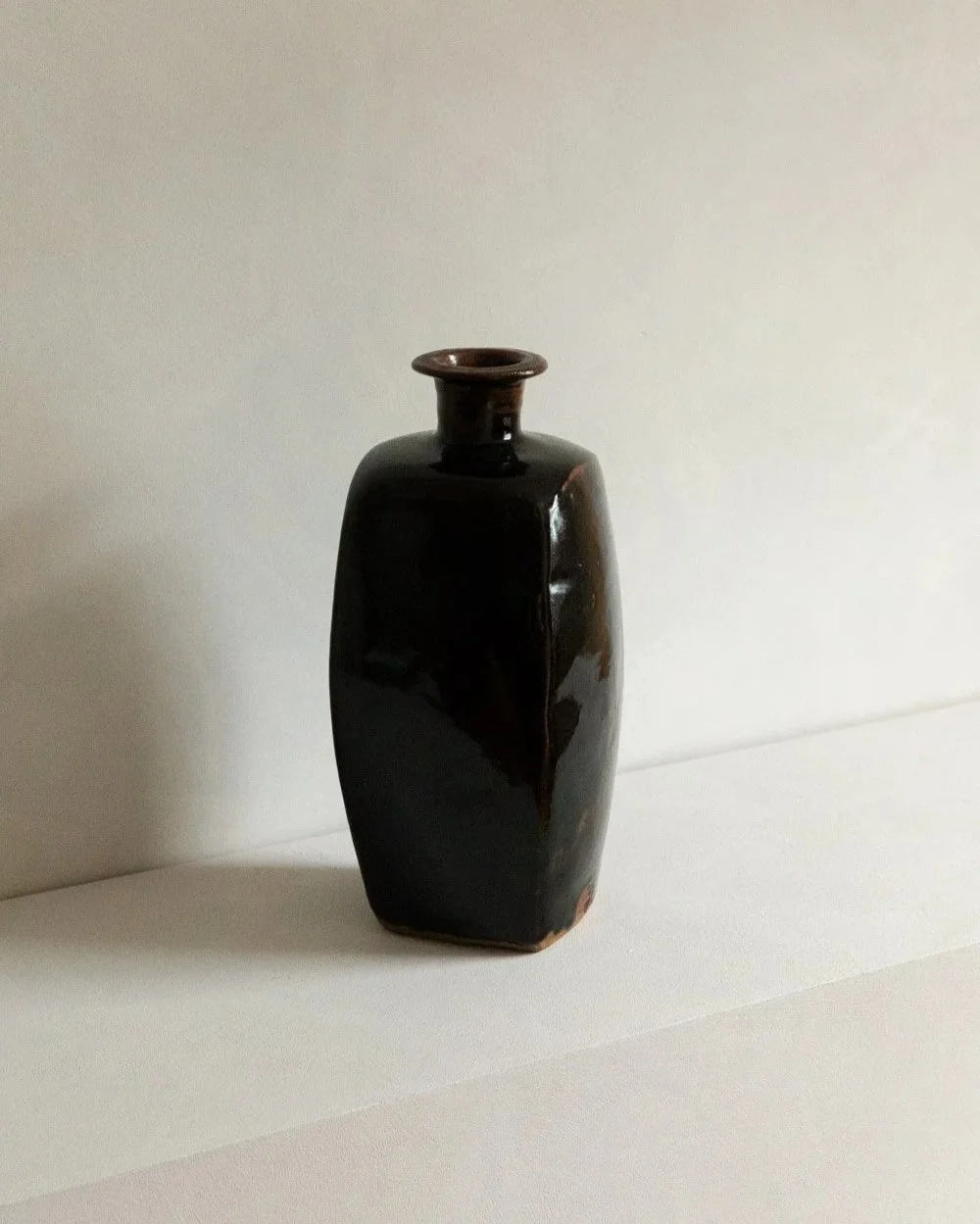 Image 2 of 3
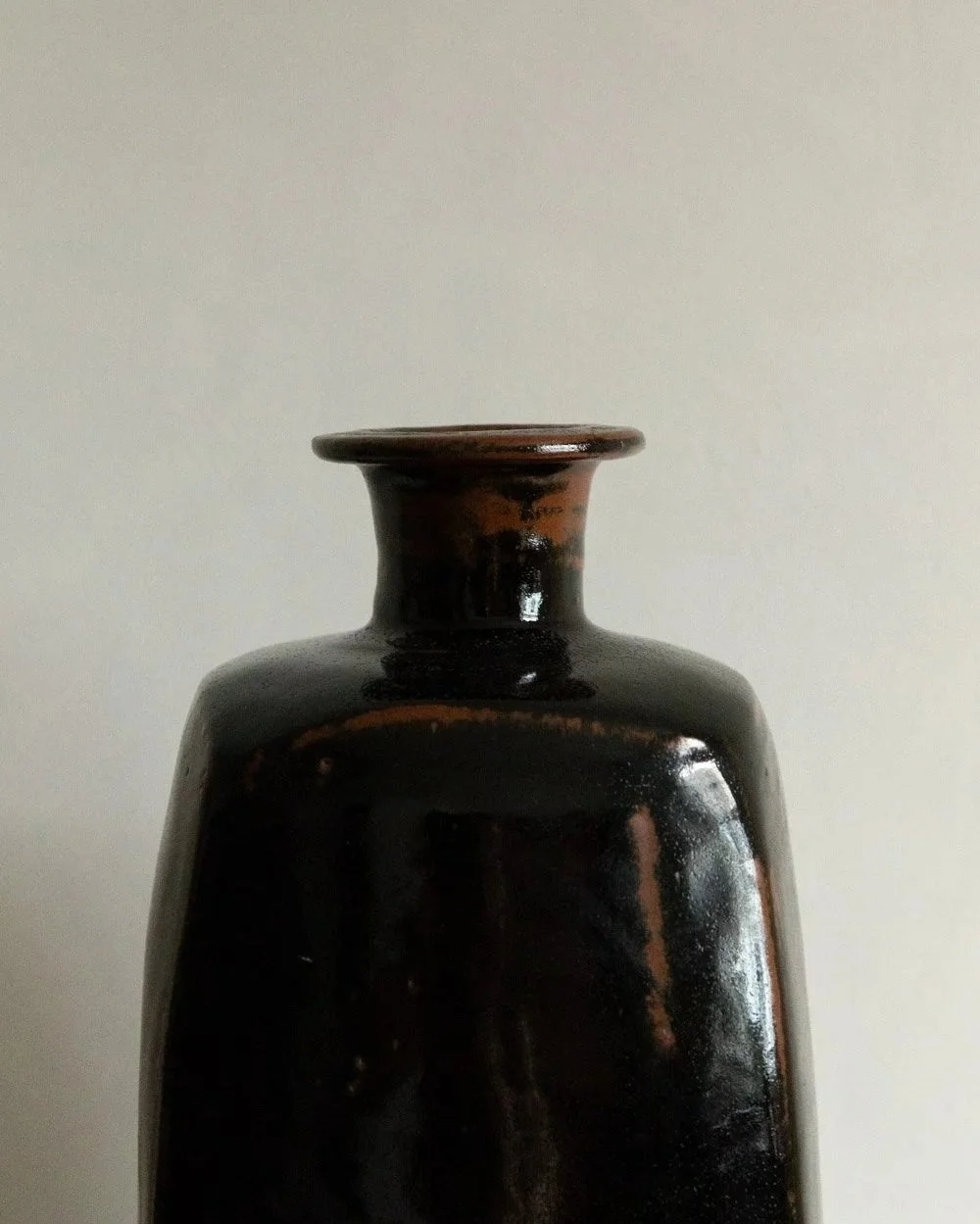 Image 3 of 3