A late 19th-century cast-iron mechanical money box, known as the Tammany Bank. Produced by the J. & E. Stevens Co. in Cromwell, Connecticut, and patented on December 23, 1873 (Pat. No. 245,734), this example represents one of the most iconic American mechanical banks of the period.
The design features a seated figure—commonly referred to as “The Little Fat Man”—dressed in grey trousers and a black coat. When a coin is placed in his outstretched hand, he promptly deposits it into his pocket while nodding politely, with no external lever required.
The bank takes its name from Tammany Hall, the New York political organisation associated with corruption and machine politics in the 19th century. The figure is believed to caricature William "Boss" Tweed (1823–1878), who led the Tammany General Committee and was famously imprisoned for political fraud. The mechanism playfully—and pointedly—commemorates his reputation for pocketing public funds.
Cast into the bank are the inscriptions: Tammany Bank on the front, Halls Pat. on the side, and PAT'D DEC 23 1873 on the back.
Origin: USA
Period/Style: Late Victorian
Date: Patented 1873, produced late 19th century
Material: Cast iron
Dimensions: 14cm height × 7.5cm width × 11cm depth
Literature:
• The Bank Book, Bill Norman, p. 57, Fig. 5420-a
• Collecting Cast Iron, Alex Ames, p. 119, Fig. 326
• Penny Lane, Al Davidson, p. 208, Fig. 455
+ Shipping Info
A late 19th-century cast-iron mechanical money box, known as the Tammany Bank. Produced by the J. & E. Stevens Co. in Cromwell, Connecticut, and patented on December 23, 1873 (Pat. No. 245,734), this example represents one of the most iconic American mechanical banks of the period.
The design features a seated figure—commonly referred to as “The Little Fat Man”—dressed in grey trousers and a black coat. When a coin is placed in his outstretched hand, he promptly deposits it into his pocket while nodding politely, with no external lever required.
The bank takes its name from Tammany Hall, the New York political organisation associated with corruption and machine politics in the 19th century. The figure is believed to caricature William "Boss" Tweed (1823–1878), who led the Tammany General Committee and was famously imprisoned for political fraud. The mechanism playfully—and pointedly—commemorates his reputation for pocketing public funds.
Cast into the bank are the inscriptions: Tammany Bank on the front, Halls Pat. on the side, and PAT'D DEC 23 1873 on the back.
Origin: USA
Period/Style: Late Victorian
Date: Patented 1873, produced late 19th century
Material: Cast iron
Dimensions: 14cm height × 7.5cm width × 11cm depth
Literature:
• The Bank Book, Bill Norman, p. 57, Fig. 5420-a
• Collecting Cast Iron, Alex Ames, p. 119, Fig. 326
• Penny Lane, Al Davidson, p. 208, Fig. 455
+ Shipping Info

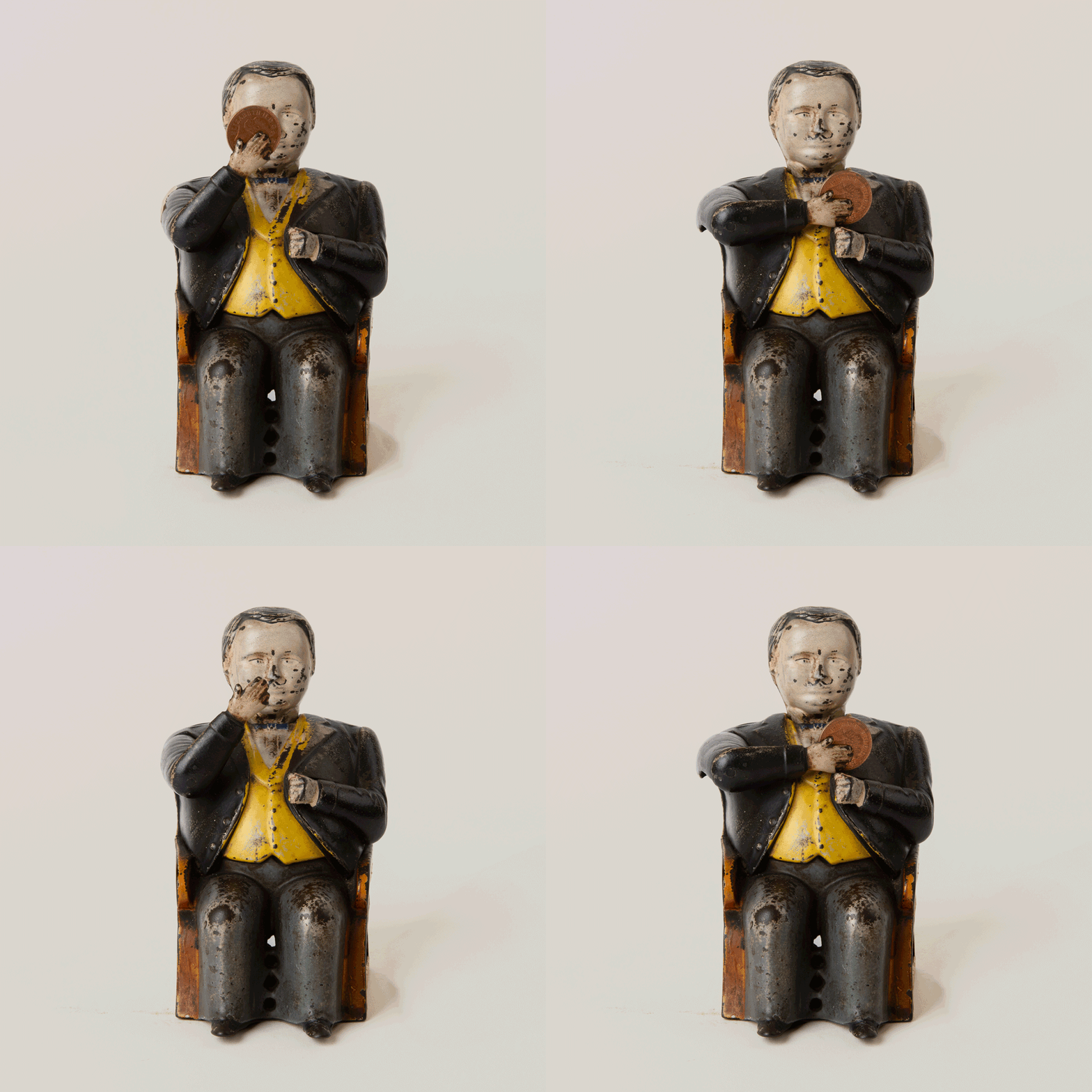 Image 1 of 3
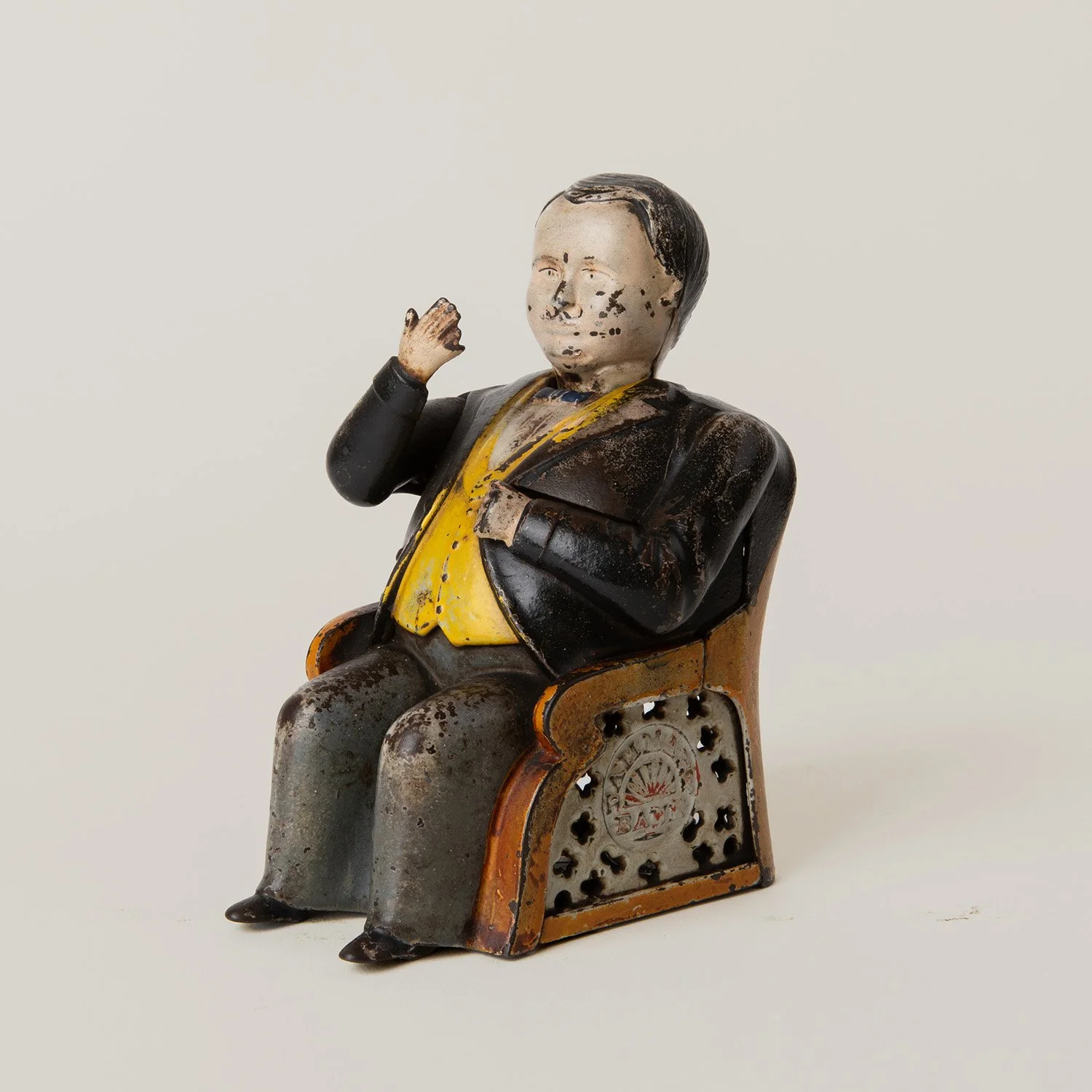 Image 2 of 3
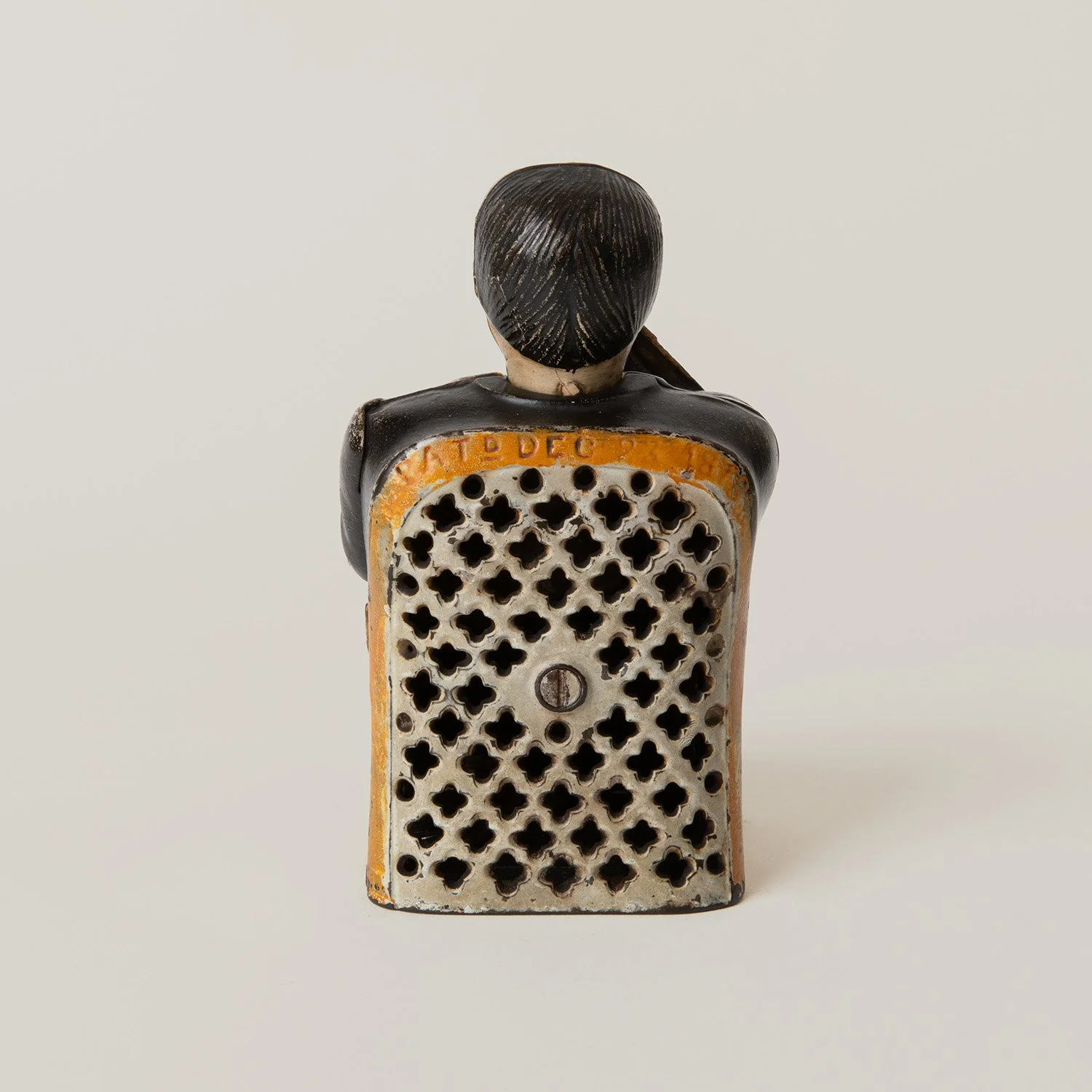 Image 3 of 3